

Sea Buckthorn Oil for Acne: Benefits, Uses, and Real Results

Acne scars often stay long after breakouts disappear. Skin can look uneven. Redness and dark marks may linger even when acne feels under control. This ongoing damage pushes many people to search for better solutions. That search has brought sea buckthorn oil for acne into the spotlight.
Sea buckthorn oil comes from the berries and seeds of the sea buckthorn plant. It has a deep orange color and a rich nutrient profile. The oil contains omega fatty acids, antioxidants, and essential vitamins that support skin repair. Many skincare routines now use it for natural skincare for acne, barrier recovery, and post-acne care.
This oil does not promise overnight results. Instead, it supports steady improvement. With consistent use, skin often feels calmer. Tone looks more even. Acne marks may fade gradually rather than suddenly.
Results depend on more than the ingredient alone. Application plays a major role. Using the right amount, at the right time, matters. Knowing how to use sea buckthorn oil for acne scars, how often to apply it, and which skin types respond best can turn slow progress into visible improvement.
What Makes Sea Buckthorn Oil Effective for Acne?
Its unusually diverse nutrient profile supports the benefits of sea buckthorn oil for skin and health. Unlike many facial oils, it contains a rare combination of lipids and antioxidants that directly address factors involved in acne development and healing.
Key components include:
- Omega-3, omega-6, omega-7, and omega-9 fatty acids, which support barrier repair and moisture balance
- Vitamin A is known to assist skin turnover and texture refinement
- Vitamin C and vitamin E are powerful antioxidants that help protect against environmental damage
- Flavonoids and polyphenols, which help reduce visible inflammation
One of the most notable components is omega-7 (palmitoleic acid). This fatty acid is naturally present in human skin but is rarely found in plant oils. Its presence explains why sea buckthorn oil skin benefits often include improved elasticity, smoother texture, and faster recovery after breakouts.
Thanks to its anti-inflammatory and antimicrobial properties, sea buckthorn oil is frequently used to calm active acne while supporting long-term skin healing.
How Sea Buckthorn Oil Helps Treat Acne-Prone Skin
Acne-prone skin is often misunderstood as skin that needs to be dried out aggressively. In reality, acne frequently involves a compromised barrier, excess inflammation, and imbalanced oil production.
Sea buckthorn oil acne benefits work on several of these factors at once:
- Balances sebum production: Acne-prone skin is often deficient in linoleic acid. Sea buckthorn oil provides this fatty acid, which may help normalize oil composition and reduce clogged pores. This makes sea buckthorn oil for oily skin a practical option when used in moderation.
- Calms redness and irritation: Chronic inflammation contributes to persistent breakouts and slow healing. The oil’s antioxidant profile supports calmer skin, making it useful for sea buckthorn oil redness and acne concerns.
- Supports barrier repair: Overuse of harsh treatments can leave skin reactive and sensitive. Sea buckthorn oil barrier repair properties help restore comfort without suffocating the skin.
For many users, sea buckthorn oil acne-prone skin routines focus on reducing irritation rather than stripping oil, which can help prevent recurring breakouts.
Sea Buckthorn Oil for Acne Scars and Hyperpigmentation
Post-acne marks often feel more stubborn than acne itself. Sea buckthorn oil for acne scars is commonly used to support gradual improvement in tone and texture rather than instant correction.
Its effects include:
- Supporting skin regeneration
Improved cell turnover helps fade post-inflammatory hyperpigmentation and soften uneven texture over time. - Helping with dark spots and discoloration
Regular use of sea buckthorn oil for dark spots improves brightness and evenness, especially when paired with sun protection. - Improving skin resilience
Fatty acids and antioxidants help strengthen the skin matrix, supporting a smoother appearance in sea buckthorn oil skin before and after comparisons.
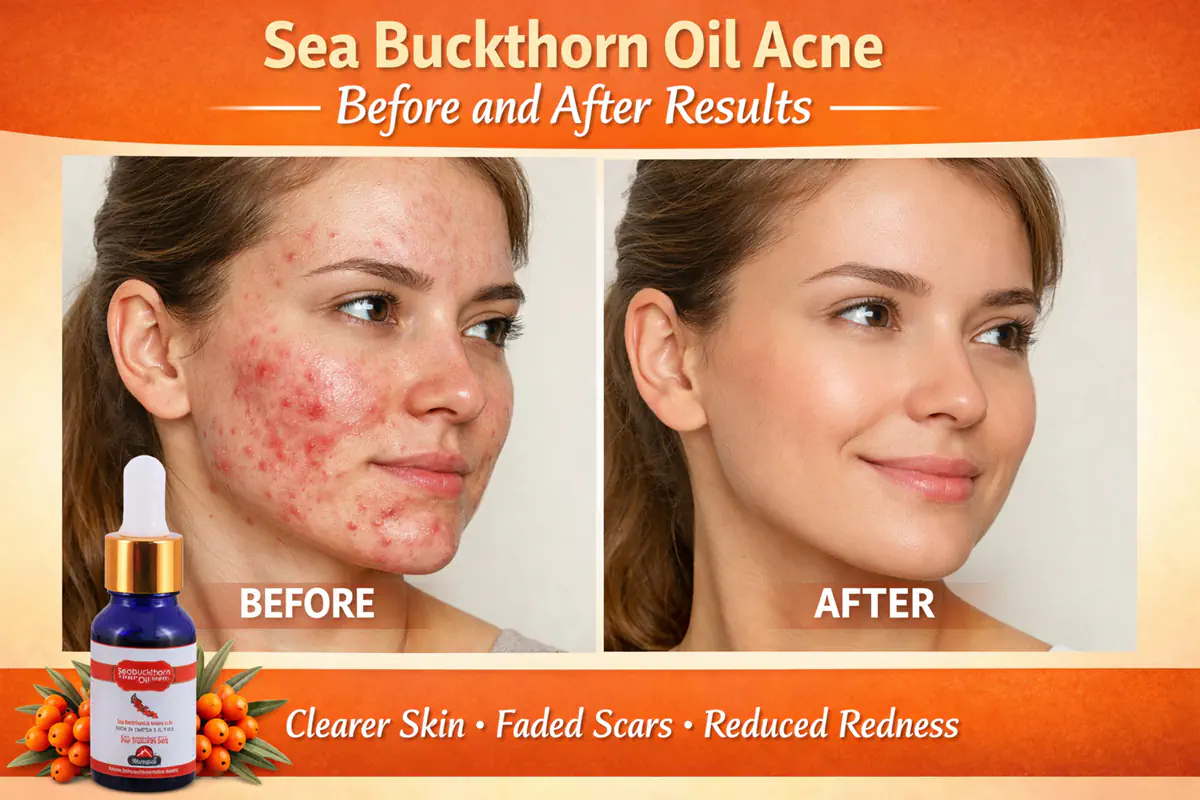
Those reviewing sea buckthorn oil acne before and after results often report reduced redness, lighter marks, and overall healthier skin tone within several weeks, with continued improvement over months.
How to Use Sea Buckthorn Oil for Acne Scars
There are several effective ways to incorporate sea buckthorn oil into an acne-focused skincare routine.
1. Direct Application (Spot Treatment)
- Apply one small drop of sea buckthorn oil, for topical use, directly to visible scars.
- Best for targeted treatment of hyperpigmentation or texture changes.
- Allow absorption before applying moisturizer.
2. Mixed with Moisturizer
- Blend 2–3 drops into a daily cream for diluted, even coverage.
- Ideal for sea buckthorn oil sensitive skin or those new to facial oils.
- Supports overall tone without overwhelming the skin.
3. Overnight Face Oil Treatment
- For deeper nourishment, apply 3–5 drops of sea buckthorn oil to your nighttime routine.
- Cleanse, apply oil evenly, and leave on overnight.
- Those learning how to use sea buckthorn oil on the face overnight should protect bedding, as the oil’s pigment can stain fabrics.
Each method supports hydration, healing, and gradual improvement of acne marks.
Best Practices for Application
Consistency matters more than quantity when using sea buckthorn oil for acne.
Best practices include:
- Perform a sea buckthorn oil patch test before first use
- Apply only to freshly cleansed skin
- Use once daily for 4–6 weeks before evaluating results
- Follow with sunscreen during daytime use, as some report mild sensitivity
- Store properly to prevent oxidation and preserve sea buckthorn oil safety
When layered thoughtfully, sea buckthorn oil layering products become simple and effective.
Sea Buckthorn Oil for Hormonal and Cystic Acne
Hormonal breakouts and deep cysts are driven by internal factors, but topical support still matters. Sea buckthorn oil for hormonal acne focuses on reducing inflammation and improving recovery after breakouts heal.
In these cases:
- Sea buckthorn seed oil for cystic acne is often preferred for its lighter feel
- The oil may help minimize post-breakout scarring and prolonged redness
- It does not alter hormones but supports skin resilience during flare-ups
Some individuals explore supplements, but topical use remains the safest option unless advised otherwise by a professional.
Sea Buckthorn Oil vs Other Oils for Acne
Comparisons help clarify expectations:
- Sea buckthorn oil vs rosehip: both target scars, but sea buckthorn offers stronger anti-inflammatory support
- Sea buckthorn oil vs tea tree: tea tree targets bacteria but may irritate; sea buckthorn is gentler
- Sea buckthorn oil vs jojoba: Jojoba mimics sebum closely, while sea buckthorn adds antioxidant benefits
Understanding sea buckthorn oil’s comedogenic rating and texture helps determine suitability for individual skin types.
Possible Side Effects to Consider
Despite many sea buckthorn oil skin benefits, side effects are possible:
- Breakouts in ultra-reactive skin
- Temporary irritation if applied undiluted
- Staining of linens and clothing
Introduce slowly, monitor response, and discontinue use if irritation persists.
Sea Buckthorn Oil Benefits Beyond Acne
Beyond acne care, sea buckthorn oil benefits skin in multiple ways:
- Soothes eczema-prone or reactive skin
- May ease rosacea and psoriasis symptoms
- Supports collagen synthesis
- Protects against pollution-related oxidative stress
These broader effects make it valuable in long-term skincare routines.
Final Words
Sea buckthorn oil for acne scars offers a gentle, evidence-supported approach to improving skin clarity over time. It works best as a supportive treatment—calming inflammation, supporting healing, and improving tone with consistent use. Whether addressing active breakouts, post-acne marks, or overall skin resilience, sea buckthorn oil fits well into routines focused on balance rather than harsh correction.
For those committed to steady, natural skincare solutions, sea buckthorn oil remains a practical and versatile option worth considering.
Frequently Asked Questions
Can sea buckthorn oil clog pores or worsen acne?
Sea buckthorn oil usually does not clog pores. Using too much or applying it to very sensitive skin may trigger breakouts. Always patch test before regular use.
Should I use sea buckthorn oil during the day or only at night?
You can use it day or night. Many prefer night use because it can stain fabrics. Always apply sunscreen if using it during the day.
What type of sea buckthorn oil is best for acne—seed or berry?
Sea buckthorn seed oil works best for acne. It absorbs faster and feels lighter. Berry oil suits dry or mature skin better.
How long does it take to see results on acne scars?
Most people see early improvement in 4–6 weeks. Redness fades first. Dark spots and texture changes take longer with consistent daily use.
How to take sea buckthorn oil orally?
Sea buckthorn oil is available as capsules or liquid supplements. Consult a healthcare professional before oral use, especially if pregnant or on medication.
How to use sea buckthorn oil on the face overnight?
Apply 3–5 drops to clean, dry skin. Massage gently and leave on overnight. Rinse in the morning. Protect pillowcases from staining.
Is sea buckthorn oil comedogenic?
Sea buckthorn oil has a low comedogenic rating. It rarely blocks pores when used in small amounts.
Does sea buckthorn oil clog pores?
Sea buckthorn oil does not usually clog pores. Overuse or layering with heavy products may increase congestion.
Does sea buckthorn oil help cystic acne?
Sea buckthorn oil may calm cystic acne by reducing inflammation. It does not treat hormonal causes but may reduce redness and scarring.
Is sea buckthorn good for acne?
Yes. Sea buckthorn oil helps calm inflammation, balance oil, and support acne scar healing when used consistently.


